TeddyBear
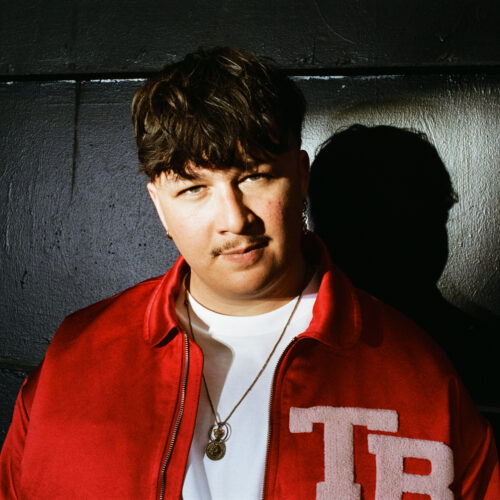
His voice captures the human soul at its most galvanising, unsettling, melancholic and, at times, disturbing. Through his songs, TeddyBear – only 24 years old – paints a picture of what he observes and hears, often from a first-person perspective.Let’s quickly rewind. A childhood spent in his hometown of Mons, in Belgium, in a family of Sicilian musicians. His father was a drummer, and he followed in his footsteps as he learnt to play music himself. He honed his craft by providing backing beats for other artists. But when several deaths struck those close to him, haunted by the feeling that death was lurking, the future TeddyBear poured his unease onto paper. And he fully let it out one evening in 2023, deep in Flanders, when he had to step in at short notice to replace a fellow rapper. This was a lifechanging moment: he hasn’t put down the mic since. “When I write, I feel as though I’m writing a letter to someone who might understand everything I have to say.” Very quickly, he was in high demand: Orelsan, Clara Luciani, Feu! Chatterton and Julien Doré asked him to support them on tour. The phenomenon was already underway.
After a handful of singles performed live with great passion, TeddyBear reunites in Brussels with his long-standing production partners, Nicolas Subréchicot (Zaho de Sagazan) and Paco Del Rosso (Damso, Camille Yembe). At the legendary ICP Studios, they’re remaking the world – and the melodies that go with it. Other collaborators joined the album’s journey, among which Tristan Salvati (Angèle, Miki). The guiding principle for the sound was that the piano, strings – particularly the cello – woodwinds and drums (sometimes played by his father!) should interplay with electronic textures. Whilst the emotions are profound, even ancestral, and shared by all, the means of expression must align with the contemporary.
The references in Le Plus Beau are as consistent as they are abundant: the visceral songs of Jacques Brel, whose ability to ‘express the impossible’ with prosaic language he admires; the daring jazz of Yussef Dayes, who embodies his lyrics like no other; the nuanced rap of Alpha Wann and Bigflo & Oli. Not to mention the legendary Salvatore Adamo, whom his father used to accompany and whose orchestrations got etched, almost in spite of himself, into his memory.
Neither entirely french variety nor entirely pop, drawing on rap as well as old-fashioned tunes, TeddyBear’s music defies categorisation. So do his lyrics, which steer clear of macho narratives or heroic role models. In Le Plus Beau he never seeks to create a character. He prefers to lay bare the flaws of a boy who doubts, cries, feels afraid, loves… sometimes too intensely. But who cares! Because that, perhaps, is where all the infectious energy of this debut album lies.